BIO Survey on Technology Transfer Shows Complexity of University-Industry Relationships

 I sat down with Cartier Esham, Director, Emerging Company Health and Regulatory Affairs at BIO, to discuss BIO’s new survey on licensing trends between universities and companies, part of a larger process of technology transfer. BIO will release the survey at this year’s BIO Investor Forum Technology Transfer Symposium, October 28, 2009. You can learn more about by visiting www.bio.org/ip/techtransfer.


Let’s start at the beginning – what makes the process of technology transfer interesting to those who care about innovation in America? What does technology transfer have to do with getting products out to people who want and need them?

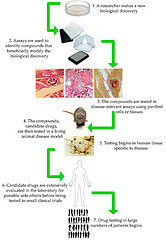
Developing research into products and technologies for use by the public is a long and complex process. In the biotechnology sector once a company obtains a license for a discovery they will spend up to or more than a decade and hundreds of millions of dollars developing that discovery into a commercially available product that also meets all required regulatory standards.   Innovation, especially in the biotechnology sector, often requires that the public and the private sectors work together.  Since enactment of the Bayh-Dole Act in 1980 – which gave U.S. universities the right to retain rights to inventions made with government funding – more discoveries are being moved out of the laboratory into the public and providing enormous economic, health, an environmental benefits to our citizens.  Prior to this Act  only 5% of publicly-funded research were ever developed into publically available products.  It is imperative that we protect the laws and policies that have stimulated the transfer of technology and foster public and private sector interactions so that key discoveries in our laboratories are developed  into products/technologies available to the public.  We need to cultivate the dialogue among universities, the federal government and the private sector and work together to identify practices that will ensure the effective transfer of technology in the United States.


What’s so hard about making a deal about a technology?

There are always difficulties in public and private sector negotiations since while many of the goals are the shared some of the perspectives may differ.  And really, there is no one size fits all approach.  BIO recently conducted a  survey among its members on technology transfer and in-license agreement negotiations.  The survey showed that  monetary terms was the most difficult part of the in-license negotiation process.  We then asked several questions of our members on what types of payment structures they have for their license agreements and what metric they typically use to calculate value.  We will be unveiling this survey during BIO’s first annual Technology Transfer Symposium in California on October 28th.  It is our hope that by collecting this data we can facilitate discussions and collect information from the biotechnology industry and university and federal labs on best practices for in-license negotiations.


Licensing can be a pretty complicated process, from what it sounds like. You have lots of cooks in the innovation kitchen, so to speak… what wasn’t known about licensing that you hoped to understand with the survey?

I think one of the more startling findings of the survey is the lack of license agreements the biotechnology industry has with the federal government.  Given that the Unites States has some of the best research facilities and premier scientists working on break through research in the health, energy, food and environment fields, it seems critical that we work to ensure this research – where appropriate – should not sit in a lab but be developed in a way that will benefit the public.


Final question: if you were an inventor of a stellar, unfunded platform technology, how would you approach today’s market, given these licensing trends?

A fundamental part of successful transfer of technology is finding the right partner – this goes for universities who seek companies to license their technology and companies looking for a specific technology that fits into their research and development pipeline.  BIO would like work on how to improve communications between the public and private sectors on how to identify and find licensing opportunities.

BIO20100_banner_468x60

India Threatens European Union: ‘Don’t Stop Flow of Illegal Drugs’

India’s Commerce Ministry drew attention to the “plight” of producers of infringing copies of vaccines last week, highlighting a need to quell the dangers of swine flu, whose vaccine is in legal development and as we speak (WHO Link):

[Indian Company] Cipla has produced a generic version of the antiviral drug Tamiflu for sale to developing countries but no one, including India itself [emphasis added], has so far been willing to buy it, either because of financial constraints or concerns over violating intellectual property laws.

 The Financial Times does an excellent job of explaining the ”request” :

Myth One: The World is So Challenged by Swine Flu, It Should Allow the Unapproved, Illegal Flow of Drugs:

“When the world is being challenged in another area, by swine flu, India is one of the countries that has been mandated by the World Health Organisation as ­having the capacity to develop vaccine along with other major countries,” Mr Sharma told the Financial Times on a visit to Seoul.

Myth Two: India is Producing Illegal Drugs Out of Own Heart to Meet Global Health Needs:

Mr Sharma’s comments are an escalation of a dispute over protectionism between India and one of its main trading partners… India’s pharmaceutical industry is one of the sectors of India’s fast-growing economy worst hit by the global economic downturn.

Myth Three: India Is Trying to Solve the Problem:

India’s commerce ministry declined to say when it might file a complaint at the WTO against the EU over drugs seizures… “[A resolution with the EU] might be in the process through discussions. But as of now we have no reason to change our stand,” said Rajeev Kher, a joint secretary of commerce.

This story is courtesy of the Financial Times. In order to access the article, you must register (free).

Sharing & Promoting Innovative Technology in Public-Private Global Development Partnerships

Sharing and Promoting Innovative Technology in Public-Private Global Development Partnerships

World Trade Organization (WTO) Public Forum, Geneva

September 29, 2009

The World Trade Organization Public Forum has become one of the most important platforms for dialogue among stakeholders of the multilateral trading system. Each year representatives from key international agricultural and development agencies attended the Public Forum as panellists and participants. The Public Forum draws significant attention from governments, non-government organizations, academics, businesses and the mass media.

This year, CropLife International is assembling a diverse panel with substantial experience to offer their views on innovative solutions to critical global agricultural problems on Tuesday, September 29 (16:30-18:30) in Geneva.

Panelists will discuss:

  1. The increasing importance of public-private partnerships for development;
  2. How such partnerships stimulate, protect, and share innovation, and
  3. The case of agricultural innovation as an example of the role of public-private global development partnerships in stimulating, protecting, and sharing innovation

Technological advances can play a particularly central role in addressing agricultural challenges such as drought and destructive pests. Meeting these challenges sustainably will require new ideas, tools and technologies. The WTO Public Forum is an excellent opportunity to have a productive discussion on these important topics; we look forward to your participation.

Invited Panelists:

  • Mr. Grant D. Aldonas – Senior Associate, Center for Strategic and International Studies (Invited)
  • Dr. Gerard F. Barry – Head, IPMU and Program 4 Leader, Golden Rice Network Coordinator, International Rice Research Institute (Invited)
  • Professor Sir Gordon Conway – Chair in International Development, Imperial College London, Imperial College (Confirmed)
  • Mr. Gavin Power – Deputy Director and Head of Financial Markets, UN Global Compact (Invited)

For more information, visit Croplife’s website.

BIO Urges Supreme Court to Reject Rigid Bilski Rule

New patent test has fundamental implications far beyond business methods

Washington, D.C. (August 6, 2009) – In an amicus brief filed today, BIO urged the Supreme Court to overturn the decision of the U.S. Court of Appeals for the Federal Circuit in Bilski v. Doll.

In its decision, the Court of Appeals created a new test under which a method or process is only patent-eligible if it is tied to a specific machine or if it transforms a particular article or substance to a different state or thing. This test, which has become known as the “machine-or-transformation” test, is now the eligibility threshold that a patent application has to meet before it is examined for novelty, inventiveness, and usefulness.

“In 1980, the Supreme Court defined patent-eligible subject matter in a flexible and inclusive way that has fostered the tremendous growth of biotechnology for the benefit of millions of patients, farmers, and consumers around the world,” stated BIO General Counsel Tom DiLenge.  “If the Court of Appeals’ contrary approach in the Bilski case is permitted to stand, it would create uncertainty that would negatively impact investment in biotechnology, and thus stifle future growth of this remarkably beneficial industry.”

The biotechnology industry is among the many stakeholders that are concerned about this new rule because it applies to all technologies, even though it was crafted to deal with business methods and abstract, disembodied processes involving logical operations and human thinking. 

“The implications of this case for biological, diagnostic, and personalized medicine methods that depend on biomarkers or other correlations between a genetic or physiological predisposition and disease-susceptibility or likelihood of treatment success must be carefully considered by the Supreme Court,” stated DiLenge.  “This new rule could be applied in biotechnology patent litigation with very unclear and unsettling results.”

“Requiring that biotechnology process claims be tied to a machine or a transformation could jeopardize already-issued biotechnology claims and will create uncertainty surrounding future grants of biotechnology patents in these areas,” DiLenge concluded.

BIO Marks Passing of Stanford Professor Emeritus John Barton: ‘Far Ahead of his Time’

On August 3, 2009, John H. Barton, George E. Osborne Professor of Law, Emeritus at Stanford Law School, passed away. BIO marks his early passing by remembering his focused personal commitment and intellectual drive to understand, teach, and shape legal science and technology policy. Barton spoke to the IP Counsels Committee at a previous IP Counsels Committee Conference, in 2008.

A few of his accomplishments and goals (Stanford):  

John Barton devoted his academic career to the examination of questions at the intersection of science and the law. A fellow of the American Association for the Advancement of Science, Professor Barton’s scholarship focused on international law concerns ranging from national defense, to the distribution of intellectual property rights across the developed and undeveloped world, to improving the health of billions of the world’s poorest people. He provided calm and reasoned advice to many institutions involved in making global policies. He helped arbitrate international debates on contentious issues and was known for his ability to marshal consensus through the careful examination of empirical evidence. For example he recommended a balanced approach to the adoption of uniform standards for the world’s patents and copyrights based on historical analysis that revealed a rigid global standard hinders technology growth in the Third World. His recent work involved the transfer of technologies in the healthcare and climate change sectors, and the development of a political theory of international organization and globalization.

Professor Barton was active in Stanford’s academic community for over 40 years:

“John was a wonderful colleague,” said Hank Greely of the Stanford Law School faculty. “He had a rigorous scientific mind that he applied to all kinds of problems, scholarly and otherwise. He loved figuring out how new technologies and old societies would affect each other, but he was always driven not just to understand, but to make the world a better place–safer from nuclear war, safer from the ravages of disease. His too early death is truly a tragedy.”

Stanford will hold a memorial service August 16 at 4:00 p.m. at Immanuel Lutheran Church in Los Altos, as well as an additional remembrance event later this fall.

Innovation Alliance: Patent Holders Weigh In On Patent Reform

For more information on the Innovation Alliance, visit www.innovationalliance.org

homelogo

New Video: Patent Holders Weigh In On Patent Reform

Innovation is at the heart of America’s economic strength and the U.S. patent system is a critical success factor. While some are advocating reforms that will weaken the patent system, we need your help in strengthening it.

Our system is the envy of the world for good reason. It enables start-ups to obtain venture capital and grow, and large companies to invest in R&D – both of which drive technology advances and create jobs. However, the system is being stretched to its limits, straining to effectively protect inventions, and ultimately driving innovation offshore.

The Innovation Alliance supports patent reform that will provide resources to strengthen the U.S. patent system. We’re working to ensure that patent applications are thoroughly reviewed and protected – which includes hiring additional skilled examiners at the U.S. Patent & Trademark Office.

Please take a moment to view a brief video featuring patent holders, explaining in their own words the value of a strong patent system at http://www.innovationalliance.net/node/79.

House Energy and Commerce Committee Vote Marks Another Step Forward on Pathway to Biosimilars

House Energy and Commerce Committee Vote Marks Another Step Forward on Pathway to Biosimilars

Strong bipartisan support for inclusion of pathway in health care reform legislation

Washington, D.C. (July 31, 2009) – Biotechnology Industry Organization (BIO) President and CEO Jim Greenwood released the following statement on the approval of an amendment to create a regulatory pathway for biosimilars by the House Energy and Commerce Committee in today’s mark-up of the America’s Affordable Health Choices Act (H.R. 3200):

“The strong bipartisan support in the Energy and Commerce Committee for a fair and balanced pathway for the approval of biosimilars is a decisive win for the patients of today and tomorrow.  The approved amendment, introduced by Representatives Anna Eshoo (D, CA), Jay Inslee (D, WA) and Joe Barton (R, TX), strikes the appropriate balance among ensuring patient safety, expanding competition, reducing costs and providing necessary and fair incentives that will provide for continued biomedical innovation.  For these reasons, it has the support of a variety of patient and academic organizations and other stakeholders including the ALS Association, Alliance for Aging Research, Association of American Universities and National Venture Capital Association.

“The amendment incorporates the principles of H.R. 1548, the Pathway for Biosimilars Act, which has more than 140 cosponsors, and the amendment offered by Senators Orrin Hatch (R, UT), Mike Enzi (R, WY) and Kay Hagan (D, NC) in the recent mark-up of health care reform legislation in the Health, Education, Labor and Pensions (HELP) Committee.  An overwhelming bipartisan majority of Senators, including Committee Chair Ted Kennedy (D, MA), voted for the amendment which will create a strong approval pathway and includes 12 years of data exclusivity to ensure continued biomedical innovation.  The amendment passed the Committee by a vote of 16 to 7 with majority support from both Democrats and Republicans.  The HELP Committee amendment also drew support from a diverse array of patient groups and other stakeholders including the AIDS Institute, National Minority AIDS Council, Children’s Tumor Foundation, National Kidney Foundation, and Vietnam Veterans of America.

“The amendment approved by the House Energy and Commerce Committee today embodies the bipartisan HELP Committee compromise while retaining the important provisions of H.R. 1548 aimed at avoiding patient and provider confusion over biosimilar products and ensuring patent disputes will be resolved prior to the expiry of the data exclusivity period.

“Today’s action also is an important vote for our nation’s economy and our global leadership in innovation.  Biotechnology helps drive more than 7.5 million high-wage, high value jobs across the nation, many of which have been created by small, highly innovative companies.  More than 90% of BIO’s research and development member companies have less than $25 million in annual revenue and the vast majority of our member companies have less than 50 employees.

“BIO thanks Representatives Eshoo, Inslee and Barton for their tireless leadership on this issue, and the many Members of the Energy and Commerce Committee from both parties who voted for the passage of the amendment.”

Technology Transfer Symposium at BIO Investor Forum


Technology Transfer Symposium:

Promoting Public-Private Collaboration for Innovation

Wednesday October 28, 2009

7:30 am – 12 pm PT

The Palace Hotel

San Francisco, CA

The Technology Transfer Symposium, held in conjunction with the BIO Investor Forum, will explore the domestic and international policy challenges for professionals in university, industry, and legal areas regarding the administration of technology transfer.  This groundbreaking meeting will bring together stakeholder groups to discuss the challenges and opportunities of today’s pressing policy issues impacting technology transfer and innovation policy, university – industry relationships, university start-ups, and unique collaborative and translational mechanisms. BIO will unveil a first-of-its-kind licensing survey as well as a study of the evolving benefits of the Bayh-Dole Act in today’s economy.

Panel Speakers

Symposium panelists include representatives from important stakeholder groups, including the Universities Allied for Essential Medicines (UAEM), Association of University Technology Managers (AUTM), University-Industry Demonstration Partnership (UIDP), Georgia Institute of Technology, small, medium, and large biotechnology companies, and philanthropic venture capitalists attending the BIO Investor Forum.

Schedule

  • Breakfast Welcome
  • Today’s Technology Transfer Policy Landscape: An overview of and context to today’s most pressing policy issues
  • Economic Impact & Licensing Relationships between Universities & Industry: An analysis of recent research on the economic impact of technology transfer & licensing in the United States.
  • Unique & Creative Collaborative Mechanisms: A menu of mechanisms for facilitating transfer of innovative technology and partnerships

What Can Attendees Expect?

Attendees will meet today’s opinion leaders in intellectual property and technology transfer and biotechnology policy, examine and forecast domestic policy trends; study collaborations that successfully increased access to technology through unique partnerships both within the United States and internationally between governments, academia, philanthropic investors, companies and others; and exchange ideas on ways to foster sustainable, long-term biotechnology innovation.

Registration

The Symposium is free to attend. Space is very limited. For more information, email Margarita Noriega, Coordinator, Bioethics & IP, mnoriega@bio.org.  

New Series: Biotechnology Companies at Forefront of Global Health Innovation – Post #1: GlaxoSmithKline & Alnylam Pharmaceuticals

On July 8 2009, GlaxoSmithKline (GSK) and Alnylam Pharmaceuticals, Inc. announced a patent pool to compile intellectual property (IP) to develop treatments for 16 tropical diseases as identified by the FDA including malaria, TB and Chagas, found in 49 Least Developed Countries as defined by the United Nations. (GSK press release)

The pool currently has two members (GSK and Alnylam) but is inviting others to participate. The donated IP will be non-exclusively licensed and royalty free for the purpose of addressing the above mentioned unmet needs. The current members of the patent pool will also provide for know-how, technical resources and training to be available to those who access the pool. The pool will also help in accessing financing where possible.
GSK has donated IP for some of its New Chemical Entities (NCEs) and Alnylam has donated its RNAi platform technology to the pool for limited field of use.   

For more information you can visit Alnylam and GSK websites. We will have updates as they become available.